Maxillary Skeletal Expander UK What it is, who it is for, & how it actually works.
Most people searching for a maxillary skeletal expander in the UK have already been told their jaw is too narrow but cannot find a clear explanation of what the device does or whether it is available outside a hospital. This page names the mechanism and separates the clinical term from the consumer-facing synonyms.
The problem that brings most people here.
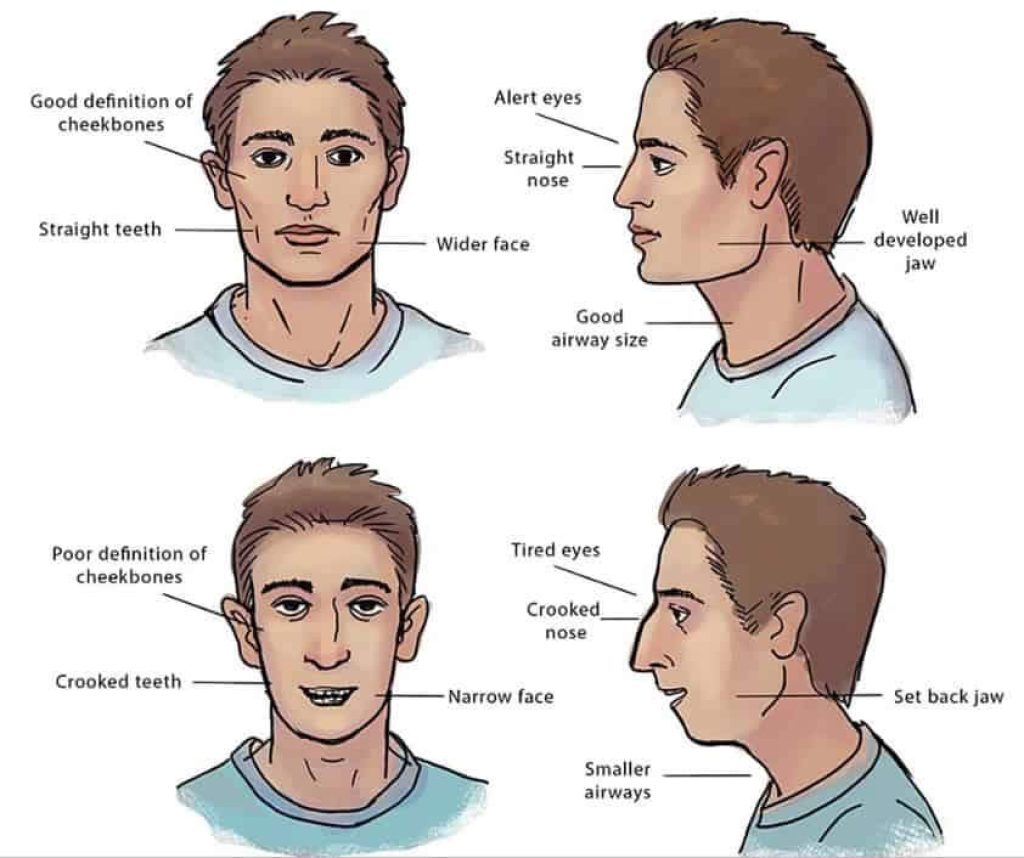
A familiar cluster: a narrow palate found in passing at a dental check, crowded teeth that needed extracting as a teenager, snoring, broken sleep, jaw clicking, a face that looks compressed in profile. The pattern is structural. The cause is upstream of any of those individual symptoms.
A narrow maxilla compresses tongue space, which often elevates the tongue and reduces the room available for the upper airway. The expander is the answer; the airway is the reason it exists.
What a maxillary skeletal expander actually is.
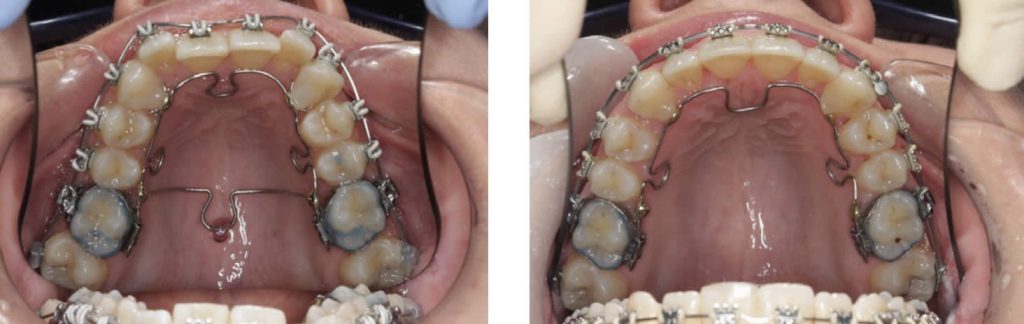
A maxillary skeletal expander (MSE) is a bone-anchored appliance fixed to the palate via titanium mini-screws, designed to widen the maxillary suture and expand the skeletal base of the upper jaw. It is not a tooth-borne expander that tips teeth outward; it is a device that acts on the bone itself.
The clinical synonyms matter, because the literature uses the terms interchangeably and patients arrive confused. MSE and MARPE (Miniscrew-Assisted Rapid Palate Expander) refer to overlapping device categories. Both are bone-anchored. The distinction can sit in the size of the device, the number of miniscrews, or the manufacturer's preference, rather than a fundamentally different mechanism.
Why the distinction between tooth-borne and bone-anchored matters.
A tooth-borne expander pulls outward on the upper molars to push the arch wider. In children with an open suture this often produces real skeletal change. In adults it generally produces dental tipping (the teeth lean outward) and little or no widening of the bone underneath.
A bone-anchored expander applies force directly to the palatal bone via the miniscrews. The suture is loaded, the bone responds, the arch widens at the skeletal level. For adults, this is usually the only way to get meaningful skeletal change without surgery.
A note on the confusing terminology.
MSE, MARPE, MARSE, MIRPE, BAME, DOME. The acronyms in this corner of the literature multiply faster than the underlying devices justify. In practice, the majority of the bone-anchored expanders in clinical use share the same core principle: titanium miniscrews anchored into the palatal bone, an expansion screw between them, controlled lateral force applied at the skeletal level.
The differences between devices come down to the size and shape of the body, the number and length of the miniscrews, the manufacturer, and small details of the activation protocol. The differences between cases come down to your anatomy. If a clinician is debating which acronym to use without first imaging your suture and bone, the conversation is in the wrong order.
Who is a candidate, and does age matter?
The mid-palatal suture may remain amenable to non-surgical expansion into the mid-thirties and sometimes beyond. CBCT imaging is used to assess suture maturity in your specific case. Age is a variable, not a verdict.
For sutures that are fully and densely fused, surgically assisted rapid palatal expansion (SARPE) may be discussed. That is a separate pathway with its own indications, and we will be honest about which route the imaging supports for your case.
What the process looks like at a structural jaw clinic.
CBCT scan and structural diagnosis. Airway and tongue posture review. Appliance fitting. Activation protocol (typically a defined number of turns per week, monitored closely). Retention phase to allow the new bone in the suture to consolidate.
The protocol leans slow rather than aggressive. Within WideSmiles™, the goal is to work with the body's healing capacity rather than against it. That tends to be more stable and more comfortable than rapid protocols, particularly for adults.
What changes, and what does not.
The palate may widen. Tongue space may increase. Nasal airway volume can improve in many cases. Crowding may reduce. Some patients report improvements in sleep quality and nasal breathing. None of these outcomes is guaranteed; all are the rationale for the work.
This is not a cosmetic treatment. It is structural work that may produce subtle changes in lower-face support as a downstream effect, but aesthetics is not why anyone should do it.
The retention phase and why it is non-negotiable.
Skeletal expansion does the visible work in weeks. The bone in the opened mid-palatal suture takes months to consolidate into stable new bone. If retention is shortened, the suture can partially close and some of the gained width is lost.
Retention typically runs three to six months after active expansion is complete, sometimes longer in adult cases. The appliance is usually kept in place, inactive, for the consolidation period; alternatively a passive retainer can replace it depending on the protocol. This is the part most patients want to skip and the part we will not let you skip without a clear conversation about the trade-offs.
Honest expectations: what we can and cannot promise.
Maxillary skeletal expansion can widen the upper jaw at the bone level, increase tongue space, and produce measurable changes in nasal cavity volume. It can support better orthodontic alignment and, in some cases, contribute to changes in sleep and breathing pattern that are real and important to the patient.
What it cannot do is guarantee any single outcome. We cannot promise that snoring will resolve, that sleep apnoea will be cured, that the face will change in a specific way, or that the result will be identical to a before-and-after photograph from another patient. Biology is individual and clinical literature tracks averages, not guarantees.
We hedge our outcome language throughout this site because the alternative is dishonest. "May", "can" and "in many cases" are the truthful description of a structural procedure that depends on your specific anatomy, your specific habits, and the rehabilitation work you do alongside the appliance.
Is this available on the NHS, and what does private treatment involve?
NHS access to skeletal expansion is limited to hospital orthodontic departments and often involves long waits and strict age and severity criteria. For most adults seeking this treatment, the realistic route is private.
Private clinics offering MSE/MARPE in London can assess and treat without a referral. At Dr Depen's clinic, the entry point is the £350 Jaw & Airway Analysis, which is fully redeemable against treatment if you decide to proceed.
Questions to ask before you book anywhere.
- Does the clinic use CBCT imaging to assess the suture before treatment?
- Do they assess airway and tongue posture, or only dental alignment?
- Is the expander bone-anchored or tooth-borne, and why is that the right choice for my case?
- What is the retention protocol, and what does it cost?
- What happens if the suture does not respond as expected?
The next step if you think your jaw is too narrow.
If the mechanism described here matches what you have been told elsewhere, the £350 analysis is the bounded way to find out whether you are a candidate. No commitment to treatment is required.
Frequently asked
Is a maxillary skeletal expander available in the UK?
Yes. Maxillary skeletal expanders can be provided by specialist private clinics in the UK, including in London. NHS access may be available through hospital orthodontic departments but waiting times can be long and eligibility criteria are often strict. A private structural assessment is often the faster route to diagnosis and treatment.
What is the difference between a maxillary skeletal expander and a regular palate expander?
A conventional palate expander is typically tooth-borne and widens the arch by tipping the teeth outward. A maxillary skeletal expander is anchored directly into the palatal bone via mini-screws, which means it can open the mid-palatal suture and widen the skeletal base itself. For adults, this distinction often matters significantly for stability and outcome.
Can adults have a maxillary skeletal expander?
In many cases, yes. The mid-palatal suture does not fuse at a fixed age, and CBCT imaging can assess whether non-surgical skeletal expansion may be possible. Adults with a fully fused suture may be candidates for surgically assisted expansion instead. An individual assessment with imaging is the only way to know.
How long does maxillary skeletal expansion take?
The active expansion phase typically spans several weeks, with the appliance activated on a defined schedule. A retention period follows, often lasting several months, to allow new bone to form in the expanded suture. Total treatment time varies by individual.
Does a maxillary skeletal expander help with breathing or sleep?
Some patients report improvements in nasal breathing and sleep quality following skeletal expansion, as widening the palate can increase nasal airway volume. Outcomes vary and cannot be guaranteed. A structural assessment that includes airway evaluation can give a clearer picture of what may be achievable in your specific case.
Will I need a referral to access this treatment privately in London?
No referral is typically required to book a private structural assessment at a specialist jaw clinic. You can self-refer and begin with a diagnostic appointment that includes imaging and an airway evaluation before any treatment decision is made.
Is maxillary skeletal expansion painful?
The appliance may cause pressure and some discomfort during the activation phase, particularly in the first few days after each turn. Most patients describe it as manageable rather than acutely painful. Your clinician will guide you on the activation schedule and what to expect at each stage.