Child Jaw Expansion London
For optimal breathing, sleep, smiles, and face profiles
Why Small Jaws in Adults Are More Common Than You Think
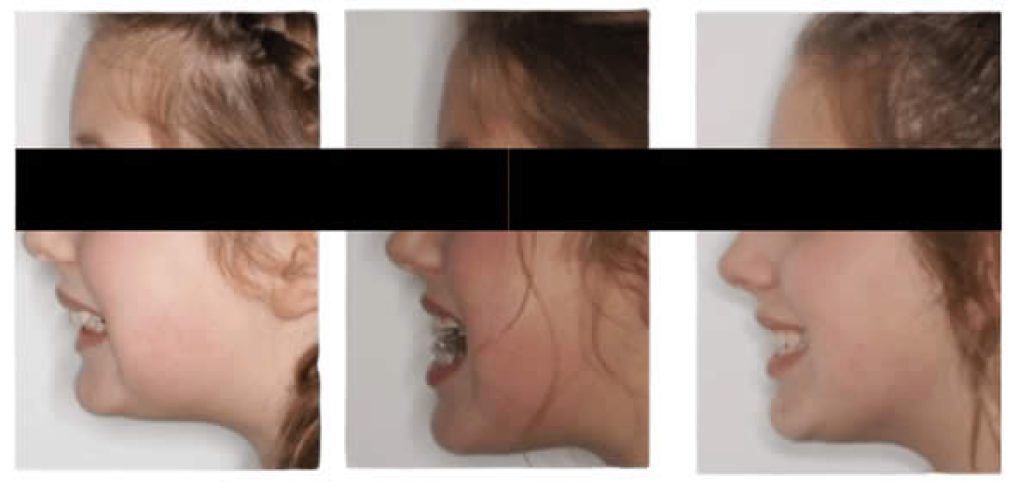
If your child is mouth breathing, developing crowded teeth, sleeping poorly, or struggling with energy or focus — it’s not random.
These signs are often linked to jaw size.
In children, the upper and lower jaws guide how everything else develops.
Breathing. Sleep. Facial shape. Jawline. How teeth come through.
Between the ages of 3 and 12, the jaws are still developing.
When they receive the right stimulation, they can grow to their natural genetic potential — supporting healthier breathing, better sleep, balanced facial development, and straighter smiles.
The reassuring part?
If your child is in this age window, there is still time.
Early orthodontic assessment focusing on jaw growth, breathing, and development — can help guide growth in a healthier direction — so your child can develop to their full potential.
Why Children's Jaws Are Smaller Today Than They've Ever Been
Most people assume jaw size is genetic.
In reality, environment matters more.
Children today are growing up very differently to previous generations.
Key factors include:
- Softer diets that don’t stimulate the jaws to grow
- Mouth breathing, often linked to allergies or blocked noses
- Reduced or absent breastfeeding, which can limit early jaw stimulation
- Low tongue posture, where the tongue doesn’t rest on the roof of the mouth
Growing jaws need consistent, gentle challenge to reach their full potential.
When that stimulation is missing, the jaws can develop smaller and narrower — even while the rest of the body grows normally.
This is why early intervention matters.
It gives your child the chance to develop fully.
Small Jaws and the Link to Teeth Grinding, Snoring, and Sleep Apnoea in Children
When the jaws are smaller than they should be, there is less room for the tongue, which can affect breathing during sleep and healthy airway development in children.
Common signs parents notice include:
- Teeth grinding or clenching
- Snoring or noisy breathing
- Restless sleep
- Mouth breathing
At night, the tongue should rest gently on the roof of the mouth.
When there isn’t enough space because the jaws are small, the tongue can fall back and narrow the airway.
The body responds by activating the jaw muscles to help keep the airway open.
This can contribute to grinding, jaw tension, and disturbed sleep.
Over time, poor-quality sleep can affect energy, focus, mood, and growth.
Seeing a children’s airway dentist can help identify whether jaw growth and breathing are developing as they should.
The key point is this: noticing these signs early matters.
Supporting jaw development early can help create the space needed for healthier breathing and more restful sleep.

The Dangers of Mouth Breathing and Allergies

Humans are designed to breathe through the nose.
During childhood, allergies or blocked noses can make this difficult — and mouth breathing often becomes the default.
Over time, this can affect development.
Mouth breathing is linked to:
- Swollen tonsils, which can narrow the airway further
- Increased inflammation, as cold, unfiltered air enters the body
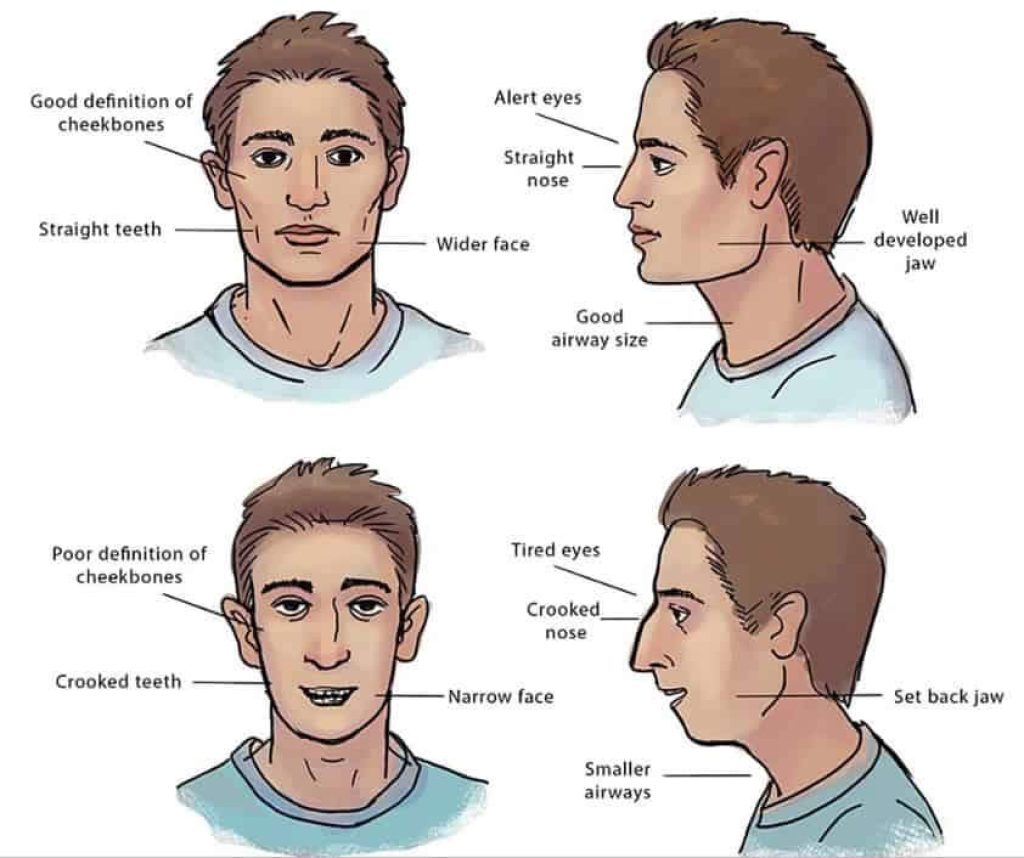
- Longer, narrower facial development and dark circles under the eyes
- Forward head and neck posture, as the body adapts just to breathe
- Poor sleep quality, meaning less rest and recovery at night
The key point is this:
mouth breathing isn’t just a habit. It can influence your child’s face, posture, airway, and overall development.
Noticing and addressing it early allows us to look at the root cause, not just the symptom.
Tongue Ties and the Importance of Healthy Tongue Function
The tongue plays a much bigger role in children’s development than most people realise.
At rest, the tongue should:
- Sit gently on the roof of the mouth to help stimulate upper jaw widening
- Support healthy nasal breathing
- Have free, comfortable movement
When the tongue is restricted — often referred to as a tongue tie — it may not move as freely.
This can affect:
- Jaw growth, as the tongue can’t reach the roof of the mouth
- Breastfeeding and latching in early life
- Speech development
- Breathing patterns, with mouth breathing sometimes developing as a result
Not all tongue ties require treatment.
What matters most is an early assessment of tongue function — to understand whether the tongue is supporting healthy jaw growth and overall development.

Optimal Facial Development, Strong Jawlines, and Jaw Size

A child’s face doesn’t just develop randomly.
It grows around the jaws.
When the upper and lower jaws have enough space to develop properly, they help support:
- Balanced facial proportions
- A stronger, more defined jawline
- Wider, more natural-looking smiles
- Better support for the lips and cheeks
When the jaws are smaller or narrower than they should be, the face often adapts around that limitation.
This can lead to faces developing longer and narrower, with less support through the mid-face and jawline.
Dark circles under the eyes are a sign that suboptimal breathing and jaw growth may be affecting facial development.
This isn’t about cosmetic perfection.
It’s about healthy structure.
Facial development is closely linked to how well the jaws grow during childhood.
Supporting jaw size early helps guide the face toward its natural, balanced shape.
Behaviour, Focus and Growth — How Sleep and Breathing Play a Role

Children don’t always show poor sleep in obvious ways.
When breathing is disrupted at night, sleep quality can reduce — even if your child appears to be asleep for long hours. Healthy airway development in children plays a central role here.
Over time, this can affect:
- Focus and attention
- Behaviour and emotional regulation
- Daytime energy levels
- Growth and development
Poor-quality sleep means the body and brain don’t fully recover overnight.
Children may seem restless, irritable, easily distracted, or overly tired — symptoms that are often mistaken for behavioural or attention issues.
The key point is this:
sleep, breathing, behaviour, and growth are closely connected.
Supporting healthy jaw and airway development early can help create the conditions for better sleep, which in turn supports how children feel, behave, and grow.
The Benefits of Early Jaw Expansion over "Waiting for Braces"

Many parents are told to “wait until all the adult teeth are through” before doing anything.
But braces focus on the teeth — not on the jaws — and waiting until the adult teeth have come through means missing the chance to help your child’s jaws grow optimally during their prime growth years.
Early jaw expansion between 3–12 years old can offer significant benefits:
- Creates space for teeth to come through with less crowding
- Supports nasal breathing and healthier sleep
- Encourages balanced facial development
- Reduces strain on the jaw muscles and joints
- Lowers the likelihood of more complex treatment later
The key idea is simple:
developing the jaws first supports everything that follows.
Every child is different, so early assessment helps us understand what your child needs to develop to their full potential.
WideSmiles™ — Slow Jaw Expansion for Children

Searching for jaw expansion treatment for children can quickly become confusing.
There are many approaches, and some suggest aggressive, high-force expansion.
What I focus on is simple:
working with a child’s natural growth pattern.
This is the foundation of my treatment philosophy, WideSmiles™.
At its core is slow jaw expansion, for one clear reason — it works with the body’s natural growth, leading to the most stable, long-term results.
In children, the jaws are still growing.
That means they respond best to gentle, gradual support — not high forces.
Slow expansion encourages the jaws to widen in line with natural growth patterns, rather than pushing them beyond the body’s limits.
This matters because:
- Growth is more stable when it’s gradual
- Children are usually more comfortable and cooperative
- The body has time to adapt and respond naturally
- Changes are more likely to be maintained long-term
Faster or more aggressive approaches are rarely necessary in growing children.
Supporting growth — rather than forcing it — leads to healthier, more predictable outcomes.
What a Child Jaw Expansion Assessment Looks Like

At an assessment, my aim is to understand how your child is growing right now — not just to look at their teeth.
I look at the whole picture, including:
- Jaw size and shape, and how the upper and lower jaws relate
- Teeth development and early signs of crowding
- Breathing patterns, including mouth breathing or snoring
- Sleep quality, restlessness, and night-time habits
- Tongue posture and movement, including any restrictions
- Facial growth and posture, including head and neck position
- Medical history, such as allergies or recurrent infections
From there, I explain clearly:
- What’s developing well
- What may benefit from support
- Whether early guidance could help — or whether simple monitoring is all that’s needed
The goal is not to rush decisions, but to give you clarity and reassurance about your child’s development.
A Team Approach to Support Your Child's Growth
Healthy growth isn’t just about looking at the jaws.
It’s about breathing, sleep, posture, and how everything works together.
That’s why, when needed, I take a team-based approach to support your child’s development.
This may involve working alongside trusted professionals such as:
- ENT specialists, if enlarged tonsils, adenoids, or nasal blockage are affecting breathing
- Myofunctional therapists, to support healthy tongue posture, breathing, and oral muscle function
- Cranial osteopaths, to support head, neck, and jaw balance where needed
- Tongue-tie specialists, when tongue restriction is limiting healthy function
Not every child needs this level of support.
The aim of collaboration is simple:
to give your child the best possible chance to develop to their full potential.
Child Jaw Expansion FAQs
What age is best to assess jaw development in children?
Jaw development can be assessed at any age, but the most responsive window is typically between 3 and 12 years, while the jaws are still growing. An assessment helps determine whether support is needed now or whether monitoring is appropriate.
Does every child with crowded teeth need jaw expansion?
Potentially, yes. In healthy development, baby teeth usually come through with spaces between them, which shows the jaws are growing to their optimal size. When there are no spaces, or when baby teeth are crowded, it can suggest the jaws may be smaller than they should be — in which case early jaw expansion may be helpful.
Is jaw expansion painful for children?
When done slowly and gently, jaw expansion is usually well tolerated by children. The focus is on comfort and working with natural growth, not force.
Will jaw expansion replace the need for braces later on?
Sometimes it can reduce the need for complex orthodontic treatment later, but not always. The goal is to support healthy development first, not to promise specific orthodontic outcomes.
My child snores — does that mean they need jaw expansion?
Not necessarily. Snoring can have multiple causes, including allergies or enlarged tonsils. A jaw and airway assessment helps identify what may be contributing and whether jaw development plays a role.
Are tongue ties always treated?
No. Not all tongue ties affect function. What matters is how well the tongue moves and rests. Treatment is only considered when function is clearly limited.
What if my child doesn't need treatment right now?
That’s a good outcome too. In many cases, reassurance and planned monitoring are all that’s needed. The aim is clarity, not intervention for the sake of it.
Free Jaw/Smile Analysis & Virtual Call
PLEASE NOTE: To book your virtual call you will be redirected to a page where you’ll need to select between an adult or child jaw analysis or a smile analysis.