Jaw Expander What it is, & whether you actually need one.
A jaw expander is not a cosmetic appliance. It is a structural tool that widens the roof of the mouth to create space for the tongue, open the airway, and address the root cause of symptoms most people have been told are unrelated to their jaw.
The problem a jaw expander is solving, not just the appliance itself.
A narrow jaw is not just a dental inconvenience. The roof of the mouth is the floor of the nose. When it is narrow, the tongue has less room to rest against the palate, the airway often loses volume, and a cluster of symptoms tends to follow: mouth breathing, snoring, broken sleep, jaw clicking, grinding.
The expander is the tool. The narrow jaw is the problem. Most pages on this topic lead with the appliance. This one leads with the structure it exists to fix.
How a jaw expander works in the body.
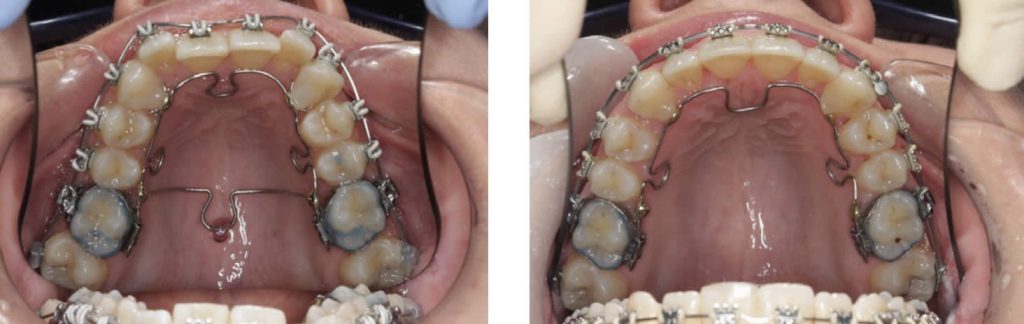
The device applies controlled pressure at the mid-palatal suture, the join down the middle of the upper jaw. The two halves of the palate gradually separate, and new bone forms in the gap. This is bone remodelling, not tooth movement.
A small temporary gap between the upper front teeth often appears during active expansion. It is a sign the suture is opening, and it typically closes as the surrounding teeth and bone settle.
The types of jaw expander you are likely to encounter.
- Removable expanders. Plates that the patient takes in and out, used in younger children with very compliant biology.
- Fixed Rapid Palatal Expanders (RPE). Banded or bonded to the upper teeth, common through adolescence.
- Bone-anchored devices (MARPE). Titanium miniscrews apply expansion force directly to the palatal bone, used in adults whose suture has fused.
Why narrow jaws are increasingly common.
A narrow jaw is rarely a genetic surprise. The pattern is closer to a lifestyle accumulation: softer modern diets that reduce chewing load, reduced breastfeeding in infancy, and childhood mouth breathing (often linked to allergies or chronic nasal congestion) that leaves the tongue resting low rather than against the palate. Each factor on its own is small. The cumulative effect on a developing jaw is not.
This is not blame. Most of the factors were normal and largely unavoidable. It is the reason structural expansion is increasingly relevant for a population that did not historically need it.
What age does jaw expansion actually work, and is it too late for adults?
The mid-palatal suture fuses gradually through adolescence and into early adulthood. Childhood expansion is easier because the suture is open and responsive. Adult expansion is possible too, but requires different devices and a longer timeline.
There is no hard age cut-off. Bone-anchored protocols such as MARPE can deliver meaningful skeletal change in many adults whose sutures have fused. CBCT imaging is the honest way to assess a specific case.
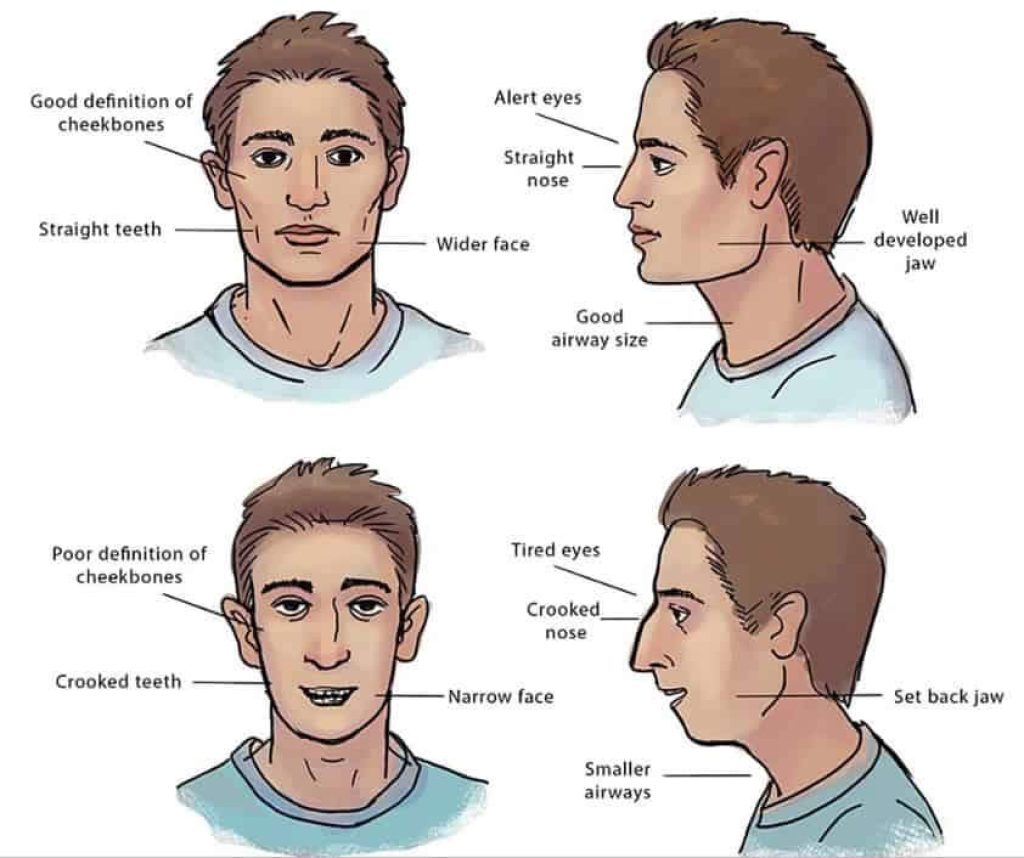
The symptoms that often point to a narrow jaw.
- Crowded teeth, or teeth that needed extracting to fit.
- Mouth breathing during the day or on waking with a dry mouth.
- Snoring and broken sleep.
- Grinding (bruxism) and jaw clicking.
- Persistent fatigue and forward head posture.
None of these is a diagnosis on its own. Together they describe a pattern worth taking seriously.
What the traditional approach missed.
Extraction-based orthodontics removed teeth to create space within a narrow arch. The front teeth ended up straight and the arch ended up smaller. We are not suggesting this was always wrong. We are saying the airway was rarely in the room when the decision was made.
What a structural assessment actually looks at.
Jaw width, palate shape, tongue posture, airway space, breathing pattern, jaw joint, prior orthodontic history. The £350 Jaw & Airway Analysis covers all of these in sixty minutes. Jawthodontics™ is the category we work within; WideSmiles™ is the method.
What an honest expectation looks like.
Expansion may give the tongue more room to rest against the palate. It may improve nasal airway volume. It may reduce dental crowding and support better jaw function. It is not a cure for sleep apnoea on its own and it does not "transform" a face into something it never was. The honest version of the conversation acknowledges both what is possible and what is not.
We hedge our outcome language throughout because that is what the evidence supports. "May", "can", "in many cases" are not weasel words; they are the truthful description of a clinical procedure that depends on individual biology.
A note for parents researching for a child.
Many readers of this page are parents whose child has been told they may need a jaw expander. The decision is usually presented as straightforward; in practice it has more nuance than the leaflet suggests.
The right age for jaw expansion is rarely a single number. The window between roughly seven and twelve years old is often clinically favourable because the mid-palatal suture is responsive and the rest of the face is still developing. Within that window, the right timing for your specific child depends on their bite, their breathing pattern, any tongue tie, and the rate of their dental development.
A second opinion is reasonable if the first conversation feels rushed or alignment-only. A structural assessment looks at the airway, the tongue and the jaw joint alongside the teeth. We assess children in the same framework as adults, scaled appropriately for their age.
Where a jaw expander fits in the wider treatment plan.
A jaw expander is rarely the whole project. In an airway-first approach, expansion sits early in the sequence because changing the size of the arch changes what is possible afterwards. Alignment, retention, and any adjunct work (myofunctional therapy, tongue tie release, sleep evaluation) follow at the points where they make most sense for the case.
For a child, the sequence often runs: expansion during the growth years, retention while the rest of the face develops, alignment timed with later dental development, and review until growth is complete. For an adult, the sequence typically runs: expansion (often bone-anchored), retention while the suture consolidates, alignment with clear aligners or fixed appliances in the wider arch, and any coordinated care alongside.
The total project length is usually quoted as a range rather than a fixed date. Months for active expansion, months for retention, months for any alignment that follows. We will tell you the realistic range after the assessment, not before, and we will not promise a timeline that biology cannot support.
A useful way to think about the full project: expansion changes the foundation, retention protects it, alignment positions the dentition within the new arch, and the adjunct care (myofunctional therapy, breathing pattern work) is what makes the result hold day to day. None of these stages is glamorous in isolation. Together they describe a clinical project rather than a single procedure.
We will tell you on day one which of these stages your specific case is likely to need and roughly how long each will run. The plan is written down, not delivered verbally, so you can take it away and think about it before any treatment begins.
What to expect if you go ahead with jaw expansion.
A fitting appointment. An activation schedule. Some pressure and a temporary gap between the front teeth. A retention phase to let the new bone consolidate. Months rather than weeks for active expansion; a similar period (or longer) for retention.
Your next step if you think your jaw might be the problem.
Start with the free Jaw Quiz. Two minutes, no email gate, honest output.
Frequently asked
What does a jaw expander actually do?
A jaw expander applies gentle, controlled pressure to the roof of the mouth to encourage the two halves of the palate to widen. In children and teenagers this can happen relatively quickly because the mid-palatal suture is still open. In adults, a bone-anchored device may be needed to achieve the same effect.
Can adults have jaw expansion treatment?
Adults can often benefit from jaw expansion, though the approach differs from what is used in children. Once the mid-palatal suture has fused, a bone-anchored expander such as MARPE may be appropriate. A structural assessment is usually the first step to find out what is possible in your specific case.
Is a jaw expander available on the NHS?
NHS orthodontic treatment is available for children and teenagers in the UK whose case meets clinical need criteria, assessed using the Index of Orthodontic Treatment Need. Adult jaw expansion is rarely funded by the NHS. A private assessment can clarify your options.
How long does jaw expansion take?
The active expansion phase varies depending on the type of appliance and the amount of expansion needed. A retention phase typically follows to allow new bone to stabilise. Your clinician can give a more specific timeframe after assessing your jaw.
Does jaw expansion hurt?
Some pressure and mild discomfort are common after each activation, particularly in the first day or two. Most people find this manageable. A temporary gap between the upper front teeth often appears during treatment and usually closes on its own.
Can a narrow jaw cause snoring or breathing problems?
In many cases, a narrow palate reduces the space available for the tongue to rest in a healthy position, which can contribute to mouth breathing and airway restriction during sleep. Expanding the jaw may help address this structural cause, though outcomes vary by individual.
How do I know if I need a jaw expander?
Common signs that may point to a narrow jaw include crowded teeth, mouth breathing, snoring, jaw clicking, grinding and persistent fatigue. A structural assessment looking at jaw width, tongue posture and airway space can help identify whether expansion is appropriate for you.