Palate Expander for Adults UK What is actually possible, & why most adults were told the wrong thing.
Most adults who land here have already been told a palate expander is for children, that their bones are fused, or that their crowding is cosmetic. None of those answers is quite right. The structural reason matters more than the reassurance.
Why so many adults are only now asking this question.
The pattern is familiar at the clinic. An adult in their thirties or forties had teeth extracted as a teenager, was told crowding was cosmetic, has lived with snoring or grinding or unrefreshing sleep for years, and is finally beginning to suspect the two are connected.
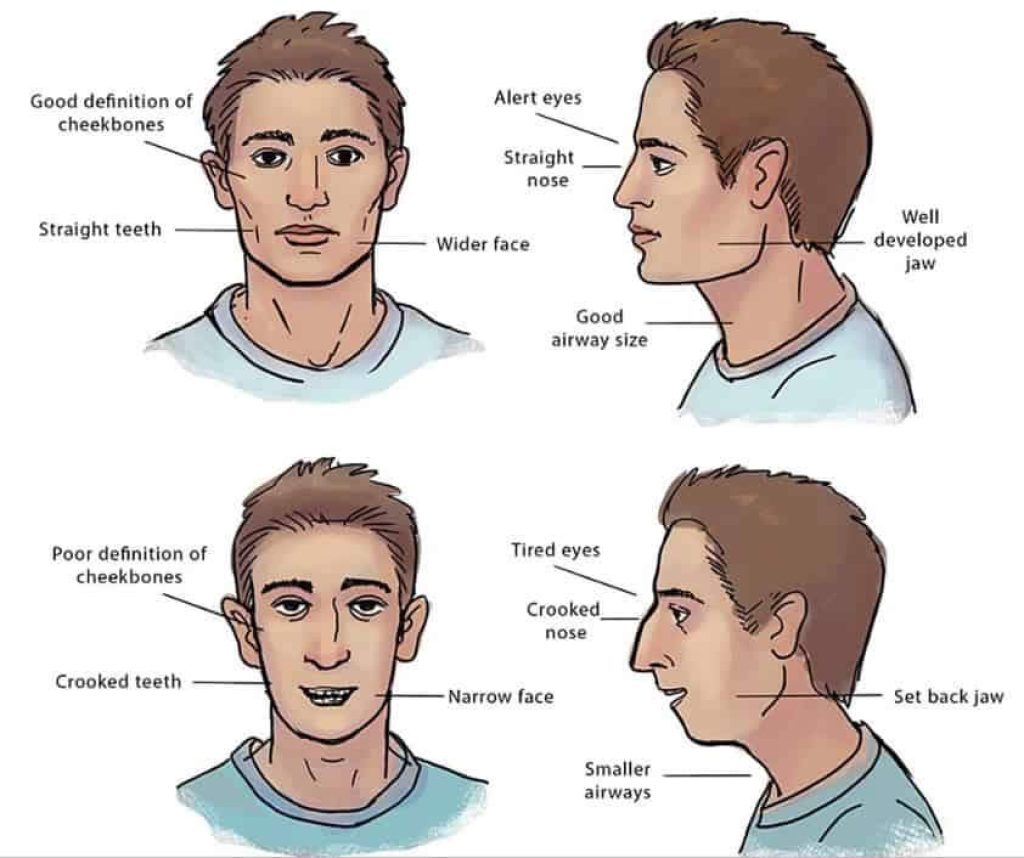
They are not imagining it. A narrow upper jaw does not stop affecting you at eighteen. It continues to shape how the tongue sits, how the airway behaves at night, and how the lower face is supported during the day. The recognition tends to arrive late because the original problem was treated, decades earlier, as something it was not.
What a narrow palate is actually doing to your airway.
Run your tongue along the roof of your mouth. That bone is the floor of the nasal cavity above and the ceiling of the space the tongue needs to rest in. When the palate is narrow and high-arched, the nose has less room above, the tongue has less room below, and the back of the tongue tends to fall further toward the airway during sleep.
This is the chain that turns a structural question into a breathing one. None of it is a guarantee that expansion will fix any specific symptom. It is the mechanism that makes the connection plausible enough to test with imaging.
The "too late" myth and why adult bone still responds.
The mid-palatal suture, the join running along the middle of the upper jaw, does fuse as we age. The textbook range is wide and individual variation is significant. Many adults still have suture activity well into their thirties; others fuse earlier. Imaging is the only honest way to know.
What changes in adults is the protocol, not the possibility. Conventional removable expanders that rely on a young, compliant suture are usually the wrong tool. Bone-anchored devices, surgically assisted approaches, and slow-expansion protocols designed to respect adult biology can all achieve real structural change. The question stops being "is it possible" and starts being "which approach is appropriate for your specific bone".
What types of palate expander are used for adults in the UK.
Three categories of adult device come up in any honest conversation:
- Tooth-borne expanders. Lighter forces, faster to fit, often tip teeth outward in adults rather than widening the jaw itself. Used selectively and rarely sufficient alone.
- Bone-anchored devices (MARPE / MSE). Titanium miniscrews drive force directly into the palatal bone, bypassing the teeth. This is what makes meaningful adult skeletal expansion possible without surgery in many cases.
- SARPE (Surgically Assisted Rapid Palatal Expansion). A surgical procedure used where the suture is fully fused and bone-anchored devices alone cannot deliver the required movement.
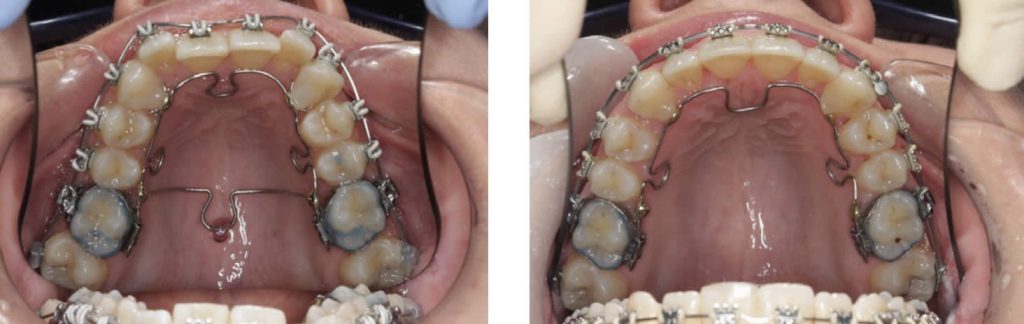
WideSmiles™, the protocol we use within Jawthodontics™, leans toward slow, gentle expansion that works with the body's healing capacity rather than against it. Where appropriate, this avoids the surgical route entirely.
What we look at on the CBCT scan.
For adult cases the imaging is what tells us which approach is realistic. We assess suture maturity (the well-cited Angelieri classification gives a useful framework), palatal bone density and thickness, root proximity at any planned miniscrew sites, arch width at several landmarks, and nasal cavity and pharyngeal airway dimensions. We also check the position of the jaw joints.
No two adult cases are the same on imaging. Patients with apparently similar symptoms can have very different sutures, very different bone, and very different airway volumes. The scan is what lets us tell you, plainly, whether expansion will help you specifically.
What the NHS does and does not cover for adult jaw expansion.
We will be direct, because the search history shows this is what brings most readers to the page. NHS orthodontic provision in the UK is largely paediatric, assessed under the Index of Orthodontic Treatment Need, and rarely funds adult jaw expansion for structural or airway reasons.
There is no scandal in this. NHS orthodontics is a finite service prioritising clear functional and developmental cases in young people. Adult expansion sits outside that remit in most regions. The realistic route for adults is private. It is worth verifying with an NHS provider in your area, then planning from there rather than waiting for an answer that is unlikely to come.
What private adult palate expansion typically involves.
Private adult palate expansion is a clinical project that runs over months rather than weeks. The typical components are the structural assessment (£350 at our clinic, fully redeemable against treatment), the appliance and its placement, the activation and monitoring period, the retention phase, and where indicated any adjunct work like myofunctional therapy or coordinated care with a sleep doctor or ENT.
We do not publish a treatment-fee menu on this page because honest figures depend on the case. After the analysis you will receive a written treatment plan with the full fee broken down by stage. If you decide not to proceed, you are not committed to anything beyond the analysis fee.
What patients describe at the six-month review.
The conversation at the six-month review in an adult case is rarely about the arch. The arch is wider by then in successful cases and that is verifiable on imaging; it is not what most adults want to talk about.
The things that come up: sleep that has stopped feeling broken. Snoring that has reduced (often noticed by a partner before the patient). Daytime fatigue that has eased. Jaw clicking that has quietened. None of these is a clinical guarantee and not every adult experiences them. The pattern is consistent enough in our cases that we mention it, with appropriate hedging.
What we are doing six months in is monitoring the bone consolidation, planning the alignment phase if it is part of your plan, and making sure the muscular and breathing patterns are catching up with the new structural foundation. The work continues to evolve through the first year.
How the WideSmiles™ approach differs from standard orthodontic expansion.
Standard orthodontics treats expansion as a step on the road to straight teeth. The aesthetic goal sits at the centre and the airway is rarely measured. Extraction is the default answer to crowding because the arch is treated as fixed.
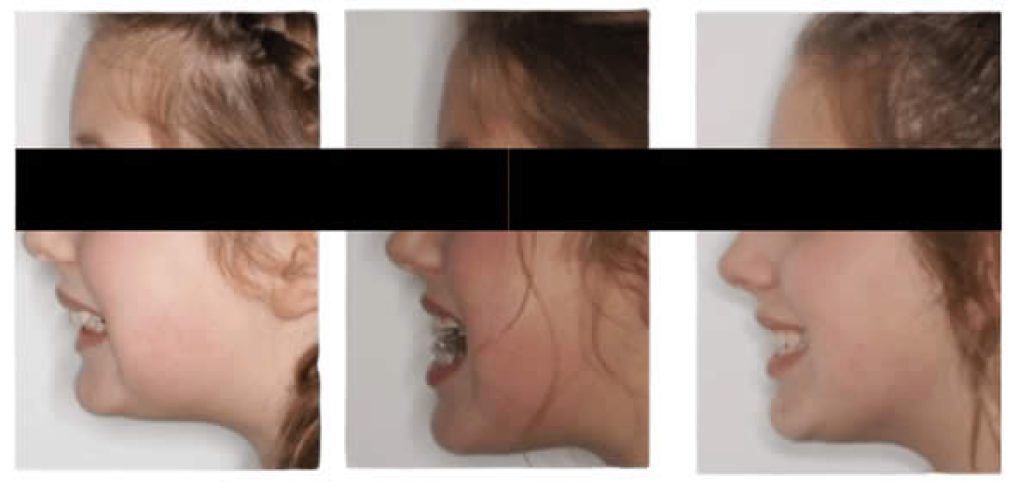
WideSmiles™ inverts that order. The first question is whether the jaw is the right size for the airway above it and the tongue inside it. The second is what (if anything) needs to be done about that. Teeth come last, not first, because their alignment is downstream of the structure that holds them.
What to expect from an adult palate expansion assessment.
A structural assessment looks beyond the teeth. We map the jaw and airway with CBCT imaging, evaluate tongue posture and breathing pattern, examine the jaw joint, and review any history of extractions or prior orthodontic work. The whole appointment runs sixty minutes and the fee is £350, fully redeemable against treatment.
If the scan shows your suture and bone quality are not amenable to non-surgical expansion, we will say so. If they are, we will say what we would propose and what we would not.
How long does adult palate expansion take, and does it hurt?
Active expansion typically runs over several months, followed by a retention phase to let new bone in the suture consolidate. The activation cycle itself is short each day, usually a small turn of the device, but the bone takes longer to mature than the visible movement suggests.
Most adults describe pressure rather than pain, particularly in the first day or two after each adjustment. Some discomfort is honest to expect and worth knowing about before you start. It is generally manageable and settles.
Is a palate expander the right next step for you?
Symptoms, age, anatomy and goals. Those are the four variables that decide whether expansion is sensible to consider. We can talk through three of them in a conversation. The fourth, anatomy, needs imaging.
The £350 assessment is the bounded way to find out. If after it we do not think you are a candidate, we will not treat you. That is not a sales tactic; it is what makes the practice work.
Frequently asked
Can adults get a palate expander in the UK?
Yes, palate expansion for adults is available in the UK, though it is less common than in children and the approach is different. Adults with fused mid-palatal sutures may need a bone-anchored device such as MARPE or, in some cases, a surgical procedure. A structural assessment with CBCT imaging can determine which approach, if any, may be suitable for your jaw.
Is palate expansion available on the NHS for adults?
NHS orthodontic treatment for adults is limited in scope and rarely funds structural or airway-related jaw expansion. Most adults pursuing palate expansion in the UK do so through private clinics. It is worth confirming eligibility with an NHS provider in your area, but private assessment is often the more realistic route.
Does palate expansion hurt for adults?
Some pressure and mild discomfort are common in the early weeks of treatment, particularly after activation of the device. This typically settles as the jaw adapts. Adult expansion tends to involve more sustained, gentle force than childhood expansion, which can affect the experience day to day.
How long does adult palate expansion take?
Treatment timelines vary depending on the device used, the degree of expansion needed and individual bone response. Active expansion may take several months, followed by a retention phase. A thorough assessment of your specific anatomy will give a more accurate estimate than any general figure.
What is the difference between a palate expander and braces?
A palate expander widens the upper jaw itself, creating room for the teeth and potentially improving tongue posture and airway volume. Braces move teeth within the existing jaw. The two are sometimes used together, but expansion addresses the structural foundation rather than just tooth alignment.
Can a narrow palate cause snoring or sleep problems in adults?
A narrow palate can reduce the space available for the tongue, which may contribute to airway restriction during sleep and is sometimes associated with snoring or disrupted breathing. Whether expansion would address your specific sleep symptoms depends on your individual anatomy and is something a structural assessment can help clarify.
What is MARPE and is it suitable for adults?
MARPE stands for Miniscrew-Assisted Rapid Palatal Expander. It uses small titanium screws anchored into the palatal bone to apply expansion force directly to the skeleton rather than the teeth. It is often considered for adults whose mid-palatal suture has fused, as it can achieve skeletal movement without surgery in many cases. Suitability depends on bone density, anatomy and clinical assessment.